Discuss territory, product range, training, inventory, spare parts, marketing support and after sales responsibilities with FUJA’s manufacturing team.
FUJA is a manufacturer, not a reseller — so your margin starts at factory-direct pricing, and your after-sales promise is backed by the people who actually build the machines.
FUJA works with international customers and partners, but every distributor program is specific to each market. Request references, current capability evidence and a written commercial proposal.
Review commercial terms, supply planning, technical capability, documentation, local service and market development responsibilities.
Direct factory quotations can reduce supply chain layers, but local pricing and margin still depend on freight, duties, service, inventory and market conditions.
Production and supply plans should be based on confirmed capacity, forecasts, lead times, materials and written purchase schedules.
Define who handles first line support, escalation, technician training, warranty decisions and customer communication.
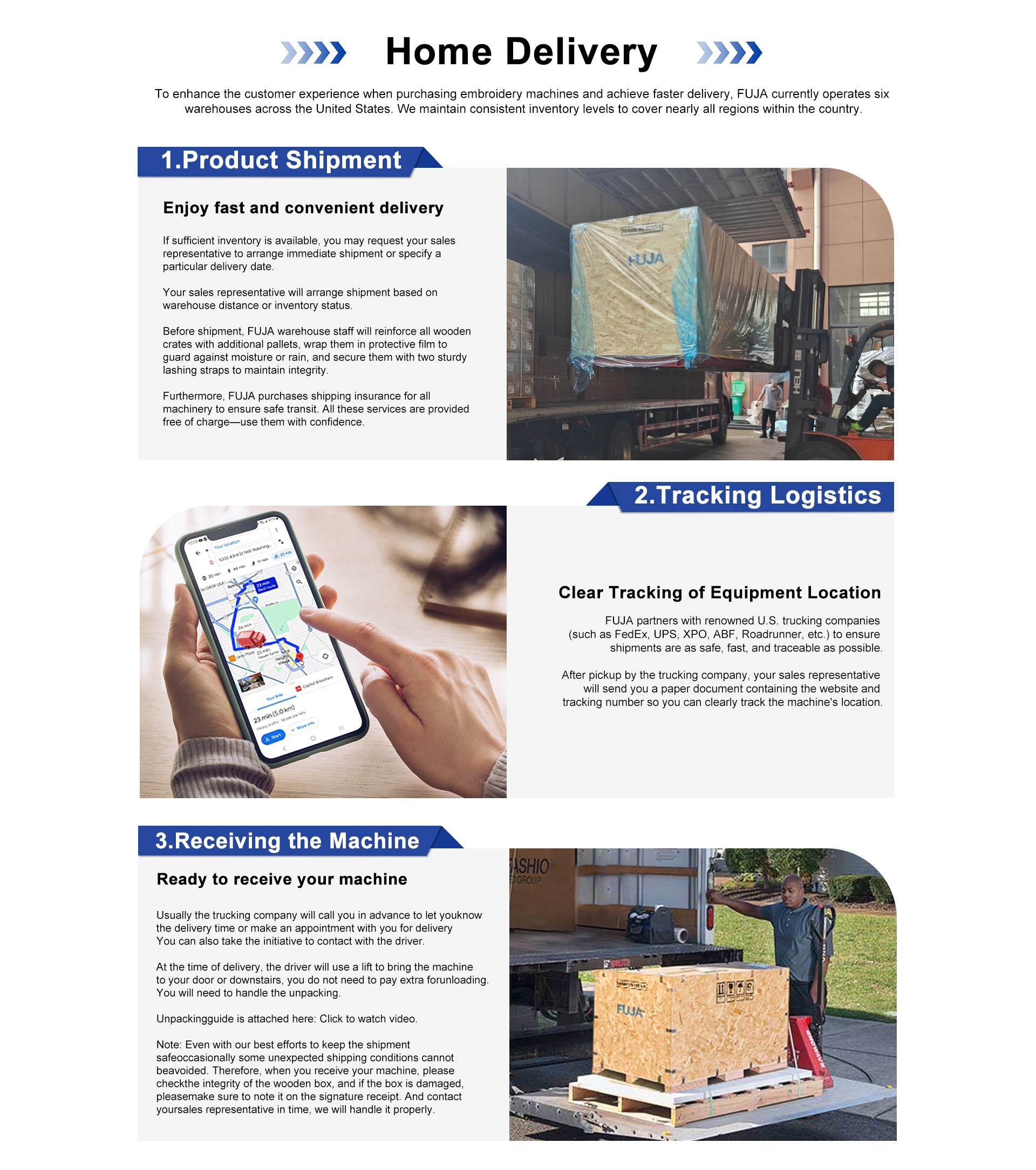
Common parts may be available from New Jersey, while other parts ship from the factory. Build a local critical parts plan for the installed base.
Approved photos, videos, specifications and catalogs may be provided according to the partnership agreement and current asset library.
Confirm the available languages, document revisions and localization responsibilities for training and sales materials.
Provide real factory photographs, approved specifications, inspection records and stitch test examples for the models you represent.
List the actual equipment used for relevant parts and avoid broad origin or ‘top level’ claims without purchase and asset records.
Define the inspection and stitch test checklist, acceptance criteria and records retained for each unit.
Describe the verified surface treatment process and its quality controls without promising performance beyond documented testing.
Both parties should document market scope, responsibilities, commercial terms, technical readiness and launch milestones.

Share the company profile, target territory, sales channels, technical capacity, forecast and service plan.

Review the factory and products by live call, current documents or an agreed visit before commercial commitment.

Confirm the opening order, training plan, sales assets, spare parts package and customer support responsibilities.

Use forecast reviews, installed base data, parts planning and technical escalation to support sustainable growth.
Opening volume depends on market, product range, customization, support plan and territory. FUJA should provide the requirement in a written proposal.
Territory terms, exclusivity, performance requirements and renewal conditions must be documented in the distribution agreement and reviewed legally.
Training may include product, sales, setup, maintenance and escalation procedures. Confirm format, language, duration, certification and ongoing support.
Create a critical parts list, stocking level and replenishment process based on the models sold and local service expectations.
Support response depends on time zone, severity and escalation process. Define service level expectations in the partner agreement.
Tell us what you plan to embroider, your expected volume, destination and preferred configuration. FUJA will review the request and respond according to the inquiry, time zone and team availability.
For machine purchases, distributor programs and OEM/ODM projects.