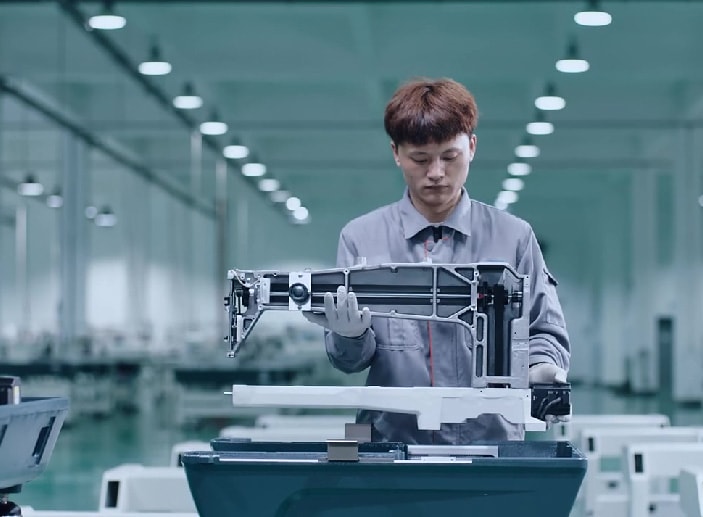
Read the operating manual for your exact machine before using it. Check the site, power supply and operator training. Stop and ask for support if the machine is wet, damaged or behaving unexpectedly.
1. Temperature and Humidity
Check the permitted temperature and humidity in the exact model manual. Keep the machine away from condensation and moisture. If the site is outside the stated limits, ask FUJA to confirm suitable conditions before use.
2. Ventilation
Keep the ventilation openings clear. Follow the model manual for clearance around the machine and control cabinet. Do not cover vents while the machine is running.
3. Dust and Cleaning
Keep the work area free of loose lint and dust. Stop the machine and follow the manual before cleaning accessible areas. Use only the approved cleaning method. Do not open the control cabinet, blow dust into it or use a hairdryer inside it. Electrical cleaning belongs to qualified service staff.
4. Power Supply
Have qualified electrical staff check the supply against the machine nameplate, model manual and local rules. Ask them to assess voltage variation and other equipment on the circuit. Do not choose cables, stabilizers or supply ratings from generic advice.
5. Electrical Installation
- Have qualified electrical staff select and install wiring according to the model requirements and local rules.
- Confirm that plugs, switches and protective equipment meet the requirements for the machine and destination.
- Have qualified electrical staff confirm the protective earth connection. Use the model documents and local rules for conductor size and testing requirements.
6. Grounding Checks
Grounding is an electrical safety requirement. Ask qualified electrical staff to check it. If the controller stops or designs shift, report the fault instead of assuming grounding will fix it.
7. Starting and Stopping
Follow the model manual for starting, stopping and restarting. Do not use repeated power cycling to clear a fault. Record the message and ask for support if the problem returns.
8. Fuse Problems
Do not bypass a fuse or fit an unapproved replacement. Stop using the machine if a fuse fails, shows heat damage or fails again after service. Ask qualified service staff to check the cause and required rating.
9. Sunlight and Heat
Place the machine away from direct sunlight and other heat sources as required by the model manual. Check screen visibility and the permitted site conditions.
10. Storms and Power Protection
Have qualified electrical staff assess the site’s power protection. Follow the approved shutdown procedure when storms or power faults affect operation. Do not handle electrical connections in wet conditions.
11. Operator Checks
- Before installation or relocation, have qualified electrical staff check the supply and connections. Operators should not probe live terminals.
- Only trained operators should use the machine. Keep hands clear of moving parts and do not open the control cabinet during operation. Follow the manual before any adjustment.
- Use thread detection controls only as described in the controller manual. Do not force switches or disable a warning to keep production running.
- Use the storage media and file transfer method supported by the controller. Follow its instructions for inserting and removing media. Keep approved design files backed up.

12. Storage and Restarting
- If the machine has been stored or shows signs of moisture, do not dry circuit boards with a hairdryer or power it on to test them. Ask qualified service staff to inspect it before restarting.
- Follow the model manual for storage cleaning, lubrication and protection. Apply products only to the stated locations and keep them away from electrical parts.
- Use the model’s storage and restart instructions. Do not follow a generic schedule for powering an idle machine. Qualified service staff should check wiring, insulation and connections when needed.
13. Replacement Parts
Confirm replacement parts by model, serial number and part identification. Ask FUJA to confirm compatibility and any required service procedure before fitting them.